
By: Lucia Mastroianni
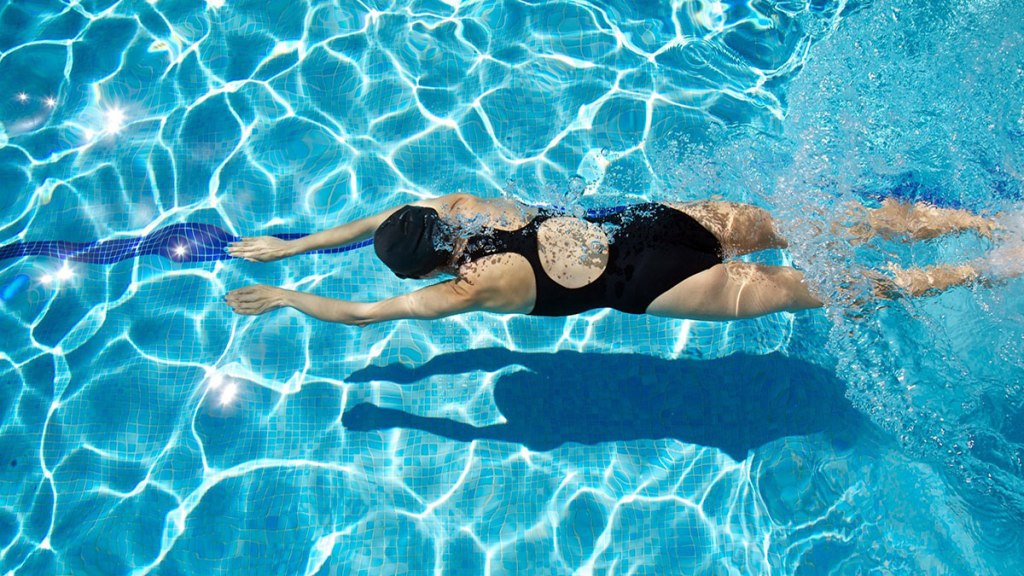
In the summer, one of the most exciting things to do is put on a swimsuit and relax in a pool or the ocean. But why is there a specific fabric that is better for the water?
While normal clothes normally contain a blend of cotton, wool, and linen which has hydrophilic properties, swimsuits are made of synthetic materials such as polyester, and elastane which are all hydrophobic materials. Hydrophilic describes molecules that easily bind with water and hydrophobic describes molecules that repel water. These properties are determined by polarity and intermolecular forces. Water’s strong hydrogen bonding causes polar/charged substances to dissolve easily in water (hydrophilic), while nonpolar substances clump together to avoid water (hydrophobic).
Molecules can be polar meaning they have uneven charge distributions. This is often due to electronegative atoms like oxygen or nitrogen bonded to less electronegative atoms like hydrogen, creating partial positive and negative charges called dipoles. These dipoles can then form strong hydrogen bonds (dipole-dipole interactions) with water molecules, effectively dissolving. But molecules without this polarity are unable to make these dipole-dipole interactions with water molecules.
Polyester is one of the main materials used in swimwear today. Polyester’s hydrophobic nature in swimsuits comes from its backbone consisting of carbon and hydrogen atoms, forming long, nonpolar chains. Unlike natural fibers (like cotton) with hydroxyl (-OH) groups that readily form hydrogen bonds with water, polyester does not have many hydroxyl groups preventing significant water absorption. This chemical composition causes swimwear to be quick drying, reduced drag, and lightweight performance in water.
Another common material in swim wear is Elastane fibers which are segmented block copolymers made up of flexible polyester chains. This material similarly lacks hydroxyl groups causing it to be less likely to bond with water.
Temperature is also a key component of how repellent a material is to water. After getting out of the pool on a really hot day, it can be observed that a swimsuit will dry much faster than in colder weather. This is not only because of the heat causing water evaporation from the swimsuit but also because of the molecular changes in the swimsuit. Increasing temperature generally strengthens hydrophobic interactions (making nonpolar molecules cluster more) and weakens hydrophilic ones (disrupting H-bonds in water).
So, next time you go swimming, observe how your swimsuit glides in water and think back to the underlying hydrophobic chemistry of the material.
Sources:
Cover Image: Swimming.com
https://www.sciencedirect.com/science/article/abs/pii/S2468519424002945



 The Fieldston Science Bulletin
Leave a comment