

Spooky season is offcially upon us, which means that it is time for another addition of FSB Fun Facts! In this edition, we want to celebrate pumpkin spice and everything nice by focusing on the autumn season. Want to know more about Pumpkins and leaves? You’ve come to the right place!
What is the difference between pumpkins, squashes, and gourds?
Pumpkins, squashes and gourds are all members of the Cucurbitaceae family, which includes squash, cucumbers, and melons. Cucurbitaceae consists of roughly 975 species of plants across 95 genera; squashes and gourds belonging to the genus Cucurbita.
The main difference between squashes and gourds, is that we eat the former and decorate with the later. Gourds can be used for more than just decorating, they are also used to make containers and even musical instruments.
Why are Pumpkins Orange?
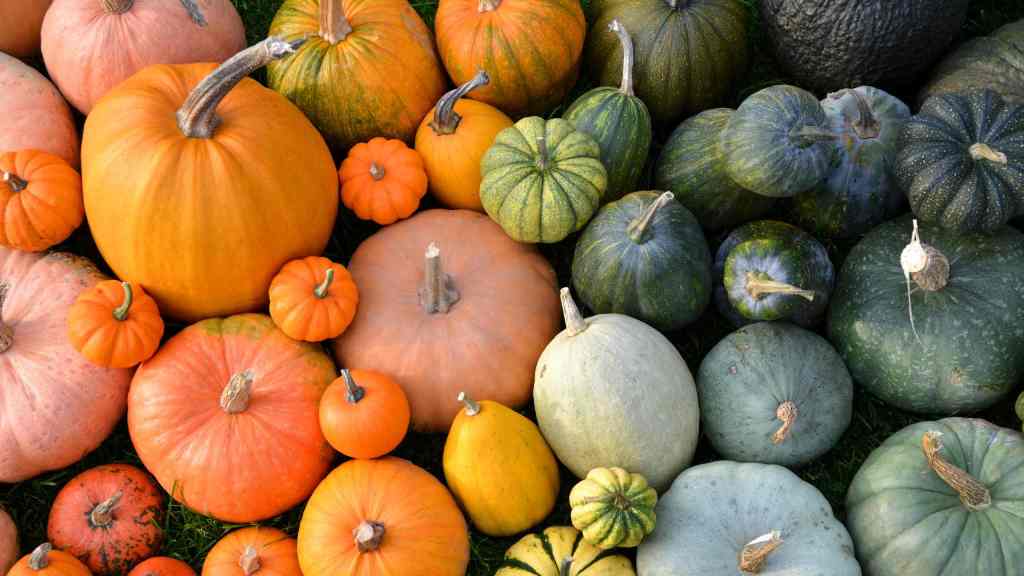
Pumpkins can be many different colors (pink, grey, white, and blue), although we mostly associate them with the color orange. Pumpkins get this autumnal hue from pigments called carotenoids – the same compounds that make carrots and sweet potatoes orange.
Pumpkins synthesize both carotenoids and chlorophyll (green) as they grow, but as the days get shorter, they begin to stop producing chlorophyl. At this point their orange hue becomes apparent. This color change can be accelerated if there are warm sunny days and cool nights, or if it was a dry summer.
Why do leaves change color?
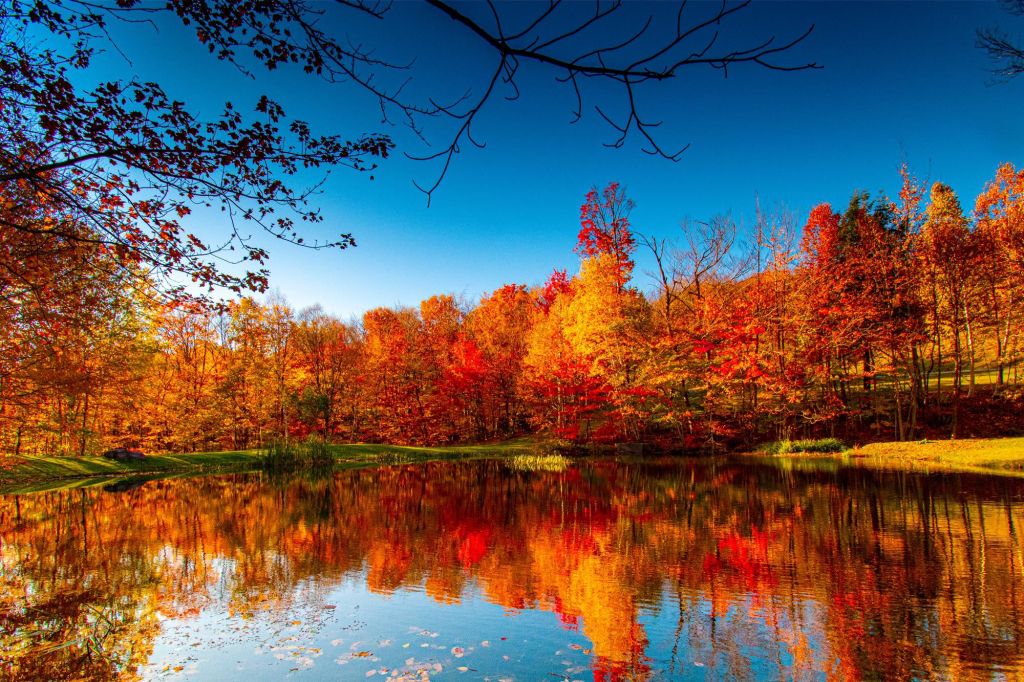
Leaves get their green color from chlorophyll, a substance which plays a role in photosynthesis. When the days start to get shorter in the fall, trees stop making chlorophyll in preparation for the winter. As the chlorophyll breaks down, the green fades and the other pigments become more visible.
Carotenoids are always present in the leaves. There are two classes of carotenoids – carotenes (orange) and xhanthophills (yellow). Anthocyanins (red) form in the fall when sugars get trapped in the leaves.
As you probably know, this year we are expecting poor leaf colors. This is because temperature, light, and water supply influence the intensity and duration of fall colors that we see. For example, sunny days and low temperatures above freezing temperatures enhance anthocyanin formation producing bright reds. We haven’t experiences the correct conditions this year.
Why do leaves fall off trees in Autumn?
Shedding leaves helps trees survive the winter in two ways.
First, it helps conserve moisture. During winter, the ground can freeze, making hard for a tree to access water. Additionally, trees cannot use water when it is in the form of ice and snow. Second, shedding leaves protests the trees from broken limbs that can result from ice and snow accumulating on the leaves.
But what causes the leaves to fall?
Leaves fall off because weather changes and reduced daylight trigger a hormone that causes the tree to grow a layer of scar tissues at the bottom of each stem. Over time, the connection between the leaf and the tree weakens and gravity and the wind cause the leaf to separate.
Only deciduous trees (Maples, Oaks, Elms) shed their leaves. Conifers (pine trees) do not shed leaves in the fall. They can retain their needles year round because, compared with to broadleaf trees, they lose less water to the air.
Sources:
Cover Image: 1-800 Flowers
https://www.missouribotanicalgarden.org/gardens-gardening/your-garden/help-for-the-
home-gardener/advice-tips-resources/gardening-help-faqs/question/495/what-is-the-
difference-between-pumpkins-squashes-and-gourds
https://arboretum.psu.edu/about/news/arboretum-pumpkin-squash-and-gourd-displays/
https://www.childrensmuseum.org/stories/why-pumpkins-orange
https://www.cornellsun.com/article/2020/12/the-science-behind-pumpkin-coloration
https://www.esf.edu/eis/eis-leaves-color-change.php
https://www.nesdis.noaa.gov/about/k-12-education/understanding-our-planet/why-do-
leaves-change-color
https://www.nps.gov/articles/how-do-trees-change-in-the-fall.htm
https://pacificsciencecenter.org/blog/why-do-leaves-change-colors/



 The Fieldston Science Bulletin
Leave a comment