
By: Francesca Master
When you think of summer activities, one of the first things that will come to mind might be going to the pool on a sunny day! In most swimming pools, there is something called chlorine, which kills bacteria that are dangerous to humans. But how does chlorine clean these pools and ensure a safe and clean swimming environment for all?
Chlorine causes a chemical reaction that breaks down hypochlorous acid (HOCI) and hypochlorite ion (OCI-). This reaction attacks the lipids in cell walls, as well as the cell’s internal structures and enzymes, making them oxidized and harmless. Hypochlorous acid can do this in several seconds, whereas the hypochlorite ion can take 30 minutes.
The pool’s pH plays a significant role in the effectiveness of chlorine. An ideal pH range to ensure effective pool cleaning is between 7 and 8. If the pH is too high, then it will take far longer to clean the pool. Once HOCI and OCI- finish cleaning the pool, they will combine with another chemical (for example, ammonia) or get broken down into single atoms. Sunlight speeds up the breakdown process. To ensure that the pools stay clean, chlorine must be readded as the chlorine already in the pool is broken down.
Chlorine can have some adverse effects on swimmers. Many people find the smell of chlorine overwhelming or even sickening. Chlorine can also irritate one’s skin and make them feel itchy. The hypochlorite ion can also cause fabrics to fade if they are not washed.
Thanks to chlorine, you won’t have to worry about the cleanliness of your swimming pool this summer. While it may have some adverse effects, the safety it provides to swimmers is invaluable.
Source:
https://www.sunsetpools-spas.com/blog/8-fun-pool-ideas-for-summertime
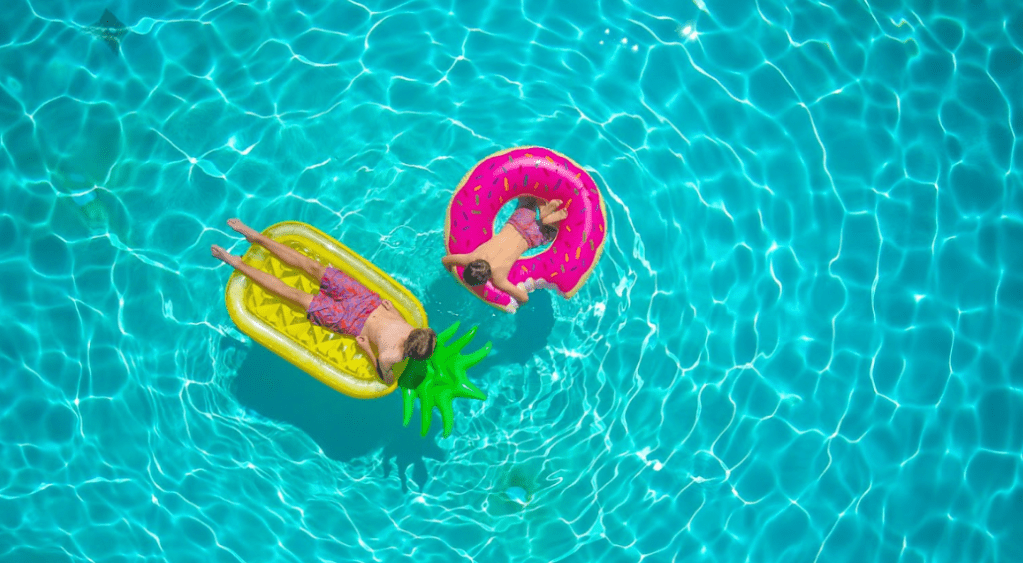
Featured Image Source: Sunset Pools



 The Fieldston Science Bulletin
Leave a comment