

By: FSB Team
1. What is the science behind fireworks?
The impressive firework displays we enjoy on July 4th are the result of a series of chemical reactions. The shell is the main part of the firework. The bottom of the shell contains the lift charge which is made of black powder. Black powder was developed by Chinese alchemists over 1,000 years ago and is composed of potassium nitrate – 75%, charcoal – 15%, sulfur -10%. The shell also contains small pellets known as stars which produce the colors, sounds and other effects we see in the night sky.
When the firework fuse is lit and the black powder is ignited, it produces hot gasses and energy which force the shell out of the tube it is sitting in (the mortar) into the sky. A second fuse ignites when the firework reaches a certain height and activates the burst charge which ignites the stars in the shell. The result is the dazzling array of colors, sounds and other effects we so enjoy.
The size and content of the stars in the firework determine the effects we see. Stars that contain metal salts produce brilliant colors. For example, strontium produces red, barium produces green, and copper produces blue.
Other chemical compounds are responsible for light effects such as strobing, sparkling and flashing. For example, adding aluminum produces white sparks, iron produces gold sparks and various types of charcoal can produce red and orange sparks.
Sound effects are also the result of chemical reactions. For example, adding bismuth creates a crackling or popping effect. Other chemical compounds can be packed tightly into a tube to create a slow burn which results in a slow release of gas that creates a whistling sound.
2. What gives popsicles their unique texture?
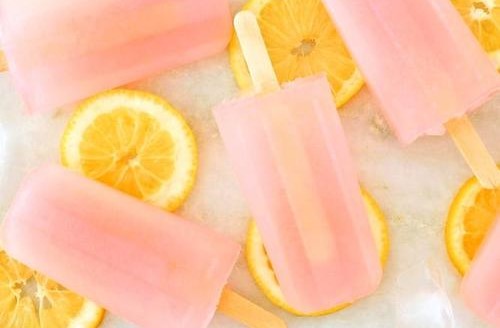
When water freezes, crystals develop as the molecules arrange themselves in a hexagonal lattice. The freezersthat popsicle manufacturers use are much colder than the freezers that we have at home which enables them to cool the liquid faster giving the molecules less time to form large ice crystals. Additionally, additives that accelerate the rate at which the liquid freezes or increase the viscosity of the liquid may be added, further impeding the growth of large ice crystals.
To prevent the ingredients in the popsicle from separating during freezing, which can happen if some of the ingredients have a lower freezing point than water does, commercial popsicle manufacturers add stabilizing ingredients. This keeps the syrup, flavoring and other ingredients from separating from the ice as it forms and they act as a semi-frozen lubricant between the ice crystals, producing a popsicle with a slushy consistency.
3. What is the science behind barbecue’s unique flavor profile?
Cooking over an open flame subjects food to very high temperatures which can range from 500 to 700 degrees Fahrenheit. If you are grilling a piece of meat, this causes the water near the surface to boil off, and then the amino acids and sugars in the meat undergo a chemical reaction known as the Milliard Reaction. This produces melanoidins, a brown pigment which browns the meat, as well as a mixture of molecules that contribute to the flavor profile. These include furanone (sweet, caramel-like flavor) and pyrazine and thiophene (roasted flavor).
A similar process occurs when you barbecue vegetables. The high temperature evaporates the water in the vegetables which prevents them from becoming soggy and it promotes a process known as caramelization. This transforms carbohydrates and sugars into compounds including diacetyl (butter-like flavor), esters and lactones (sweet, almost rum-like flavor), furans (nutty flavor) and maltol (toasty flavor). Caramelization also impacts the flavor of barbecue sauce, which contains sugar.
Charring and smoky flavors are hallmarks of barbecued food. Charring occurs when prolonged exposure to heat cause non-carbon atoms in the food break down, leaving behind the crispy, black carbon. The smoky flavors are the result of the food absorbing smoke produced by the wood or charcoal fueling the grill. This smoke is composed of gases, water vapor and small solid particles from the fuel. Burning wood produces molecules including syringol and guaiacol that are responsible for the quintessential smoky flavor we associate with barbecue.
4. How do fireflies light up?
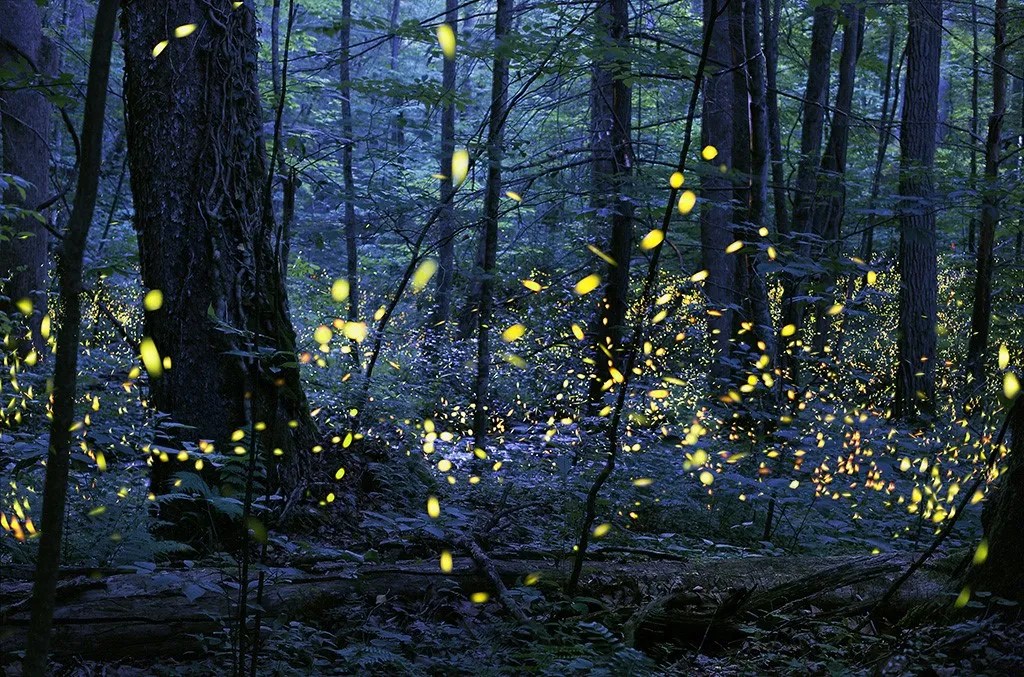
Fireflies emit light as a result of a biochemical reaction known as bioluminescence which occurs in the insect’s light organ. Light is produced when oxygen combines with calcium, adenosine triphosphate and luciferin in the presence of luciferase, a bioluminescent enzyme. A firefly controls the beginning and end of the chemical reaction, and thus the start and stop of its light emission, by adding oxygen to the other chemicals needed to produce light. They transport oxygen from outside of their bodies to interior cells through a complex series of tubes known as tracheoles. Fireflies produce cold light, not the hot light produced by lightbulbs.
Fireflies light up for a variety of reasons including attracting mates and warding off predators. Many fireflies have flash patterns unique to their species.
Sources:
https://tastefulscience.com/2015/09/ice-pops
https://recipes.howstuffworks.com/question499.htm
https://www.harvardonline.harvard.edu/blog/art-science-barbecue
Featured Image Source: Curbed NY



 The Fieldston Science Bulletin
Leave a comment