

By: Francesca Master
Snow is one of the most important aspects of winter, yet very few people understand the science behind it. Have you ever wondered how snowflakes form and why each one is unique? We have the answers for you!
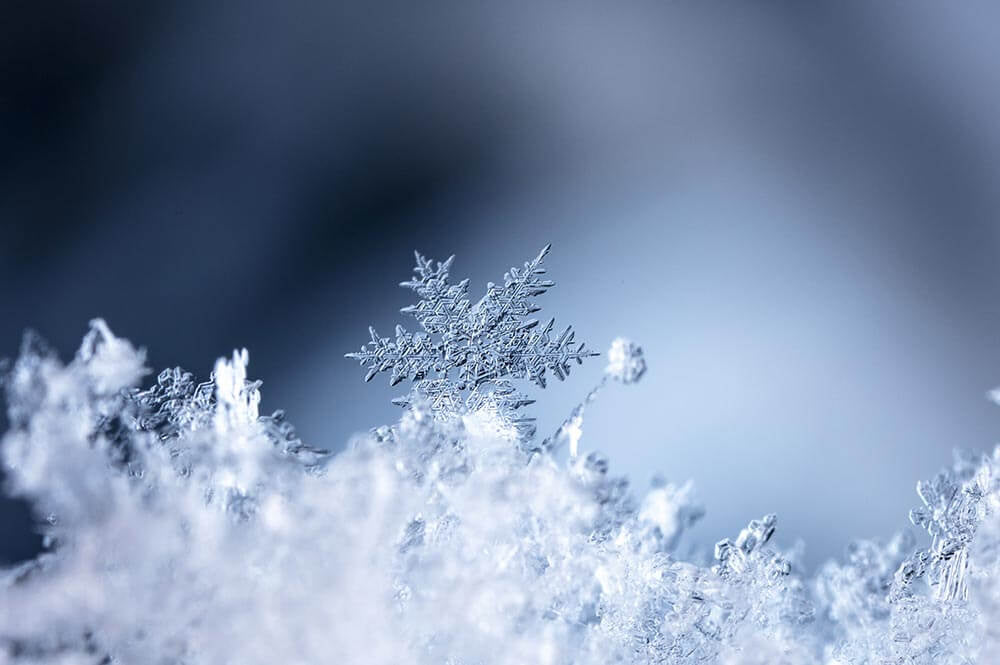
Snowflakes aren’t actually pure water, instead, they are drops of very cold water which freeze onto pollen or dust particles in the sky, forming an ice crystal. As the ice crystal falls to the ground, water vapor freezes onto it, creating new crystals that develop into the six arms of the snowflake.
So, why do no two snowflakes look the same? While all ice crystals are symmetrical and have six sides, several factors influence their individual characteristics. For instance, at 23 degrees Fahrenheit, ice crystals tend to be long and needle-like, whereas at 5 degrees Fahrenheit, they take on a flatter shape.
The atmospheric conditions also play a significant role in determining the appearance of a snowflake. Changes in temperature or humidity as the ice crystal descends can cause it to grow in various ways. Since each snowflake takes a unique path to the ground and encounters different conditions, none look identical.
Snowflakes are a special yet often misunderstood part of winter. While many people are aware of certain aspects of their creation, they may not fully understand how or why each snowflake’s formation is unique. Take a moment to appreciate their beauty this winter.
Sources:
https://www.noaa.gov/stories/how-do-snowflakes-form-science-behind-snow
Featured Image Source: Unsplash



 The Fieldston Science Bulletin
Leave a comment