

By: FSB Team
1. What are antihistamines, and how do they work?
While spring brings the beauty of blossoming flowers and trees, millions suffer from allergic reactions caused by the pollen they produce. An allergic reaction occurs when a person comes
into contact with a harmless substance that the body interprets as a pathogen. When the allergen enters the body or comes into contact with the skin, the immune system releases histamines, which bind to specific receptors located on cells throughout the body and trigger allergic reactions that can include congestion, sneezing, hives, rashes, and nausea. Pollen, dust, pet dander, insect bites, sesame, shellfish, and peanuts are common allergens.
Antihistamines alleviate allergic reactions by blocking histamine receptors. First-generation Antihistamines, including diphenhydramine (Benadryl) and chlorpheniramine (Chlor-Trimeton), easily cross the blood-brain barrier and affect H1 receptors in the central nervous system, which help regulate the body’s sleep-wake cycle. As a result, first-generation antihistamines can cause drowsiness and impair cognitive and motor functions. Second- and third-generation antihistamines do not have sedative properties because they are less likely to cross the blood-brain barrier. As a result, they have a less significant effect on the central nervous system than first-generation antihistamines. Examples of second- and third-generation antihistamines include desloratadine (Clarinex), loratadine (Claritin), and fexofenadine (Allegra).
2. What is pollen?
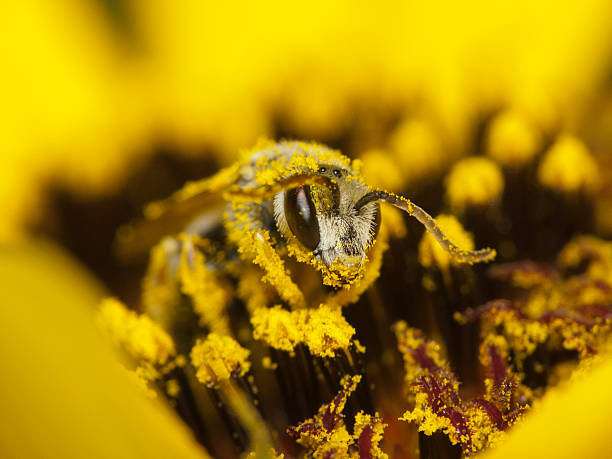
Pollen is a mass of microspores produced by the male structures of plants that travels to the female structures where fertilization occurs. Pollen travels by wind, water, and pollinators (birds, insects, mammals). Most pollen grains have three distinct parts: the central cytoplasmic part, which is the source of nuclei responsible for fertilization, the intine, which is the inner layer of the wall of the grain, and an outer layer, the exine. The exine layer is durable and is resistant to damage. Grasses, trees, and weeds produce pollen. Individual pollen grains are too small to be seen by the naked eye; the pollen we see is actually many pollen grains gathered together. Most pollen is yellow because most pollinators see that color more easily, but some plants produce red, purple, or even white pollen.
3. What is a bulb, and how does it produce flowers?
Sprouting daffodil bulbs is one of the first signs of spring, but how does this happen?
People commonly refer to plants that have specialized underground storage structures and stems as bulbs, but not all plants with underground structures are true bulbs – for example, potatoes have underground storage structures, but they are tubers, not true bulbs.
True bulbs have five major parts: the basal plate (bottom of the bulb from which roots grow), fleshy scales (primary storage tissue), tunic (skin-like covering that protects the fleshy scales), the shoot (consisting of developing flower and leaf buds), and lateral buds (develop into bulblets or offsets).
Keeping nutrients and buds below ground helps the plant survive adverse conditions above ground, including harsh weather conditions, fire, and foraging animals. Bulbs are usually perennials. They have a period of growth and flowering followed by an “apparent” dormant period when they die back to ground level at the end of the growing season. For spring bulbs, the end of the growing season is in late spring or early summer. During the “apparent” dormant season, bulbs are pre-forming leaves and flower buds underground, so when the conditions are right, they can reemerge above ground and start the cycle all over again.
4. Do April showers bring May flowers?
According to the National Centers for Environmental Information, in the US, on average, April is only the fifth wettest month of the year; June is actually the wettest month of the year. However, in April, there is a higher likelihood of short, intense rain showers because the jet stream shifts northwards, which changes the air pressure, causing the formation of cumulus clouds — the type of clouds that produce rain showers.
So do the April showers bring May flowers? They help but they are not the only reason flowers start to grow. Increasing sunlight and warming temperatures also play a significant role, creating a more hospitable environment and providing nutrients plants need to grow. April showers actually impact perennial bulbs less than other types of flowers. This is because the growth and health of these bulbs, which have been buried in the ground all winter, depends on the amount of rainfall over a number of months.
Sources:
https://www.britannica.com/science/pollen
https://extension.illinois.edu/flowers/bulbs
https://www.canr.msu.edu/news/what-is-a-bulb
https://www.accuweather.com/en/leisure-recreation/why-is-april-the-month-of- showers/691598
Feature Image Source: Unsplash



 The Fieldston Science Bulletin
Leave a comment